
Chesterfield City Directory Collections
Chesterfield County has no incorporated city within its present boundaries, so a city directory is a collection label, not proof of a present municipal boundary. The strongest starting points are Central Library's Local History Collection, the Library of Virginia, and the Chesterfield Historical Society of Virginia. Central Library confirms that it keeps city or county directories, yearbooks, family genealogies, vital-record material, military records, and microfilm. Its public pages do not publish a complete shelf-by-shelf Chesterfield run, so ask the local-history desk to verify a particular place, publisher, and year before relying on a gap or a missing volume.
| Collection | Verified coverage | Holding location | Access route |
|---|---|---|---|
| Virginia City Directories selection | 1873-1960 statewide selection | Library of Virginia and Ancestry collection | Browse by locality with account or library access |
| Boyd's Directory of Richmond City | 1869 Manchester item | Library of Virginia digital collection | Free item page and image |
| Virginia city-directory microfilm | Late 1800s to about 1940, locality-specific | Library of Virginia | In-person reference; dates vary |
| Central Library Local History Collection | Directories and related local-history formats; exact run not posted | Central Library | In-library microfilm reader and staff help |
| CHSV family and vertical files | No single directory run | Historic Trinity Church research facility | Public research facility; call before visiting |
The documented statewide range does not establish that every Chesterfield year is online. Old Richmond volumes may include Manchester or nearby county communities, while county volumes can sort a household under a postal community or rural route. A missing result can therefore mean the wrong locality, a missing issue, or a volume that remains on a shelf or reel.
Chesterfield Directory Shelf at Central
Central Library's Local History Collection is the practical local desk for city directories, yearbooks, microfilm, family genealogies, vital records, and military material. It is at 7051 Lucy Corr Boulevard and lists 804-751-2275 for the library. Staff offer genealogy help and Your Personal Librarian sessions, and the library points researchers toward CHSV, the Library of Virginia, GRIVA, and other historical groups. Bring the spelling variants, initials, street, and rough years already known. That gives staff a way to check whether an entry belongs in a county, Richmond, Manchester, or rural-route volume.
The Central Library local-history page shows the collection used for Chesterfield directory research.

That local shelf matters because a printed directory, a yearbook, and a microfilm reel can supply different dates and spellings for the same household. Ancestry Library is also among the databases listed by the library, but access should be tested at a Chesterfield library location or under its current authentication rules.
Note: The county does not publish an exhaustive online inventory of each Chesterfield directory volume, publisher, or reverse-directory run.
Chesterfield Digitized Directories at LVA
The Library of Virginia's Virginia City Directories collection provides a digitized statewide selection for 1873 through 1960. Browse locality by locality instead of assuming Chesterfield has a complete continuous run. The Library of Virginia's physical guide also describes locality-specific directory microfilm for major Virginia cities, generally from the late nineteenth century through about 1940. Those formats can carry maps, local-government notices, firms, and civic-organization listings alongside household entries.
The LVA and Ancestry directory collection is the source shown here for Chesterfield historical-directory work.
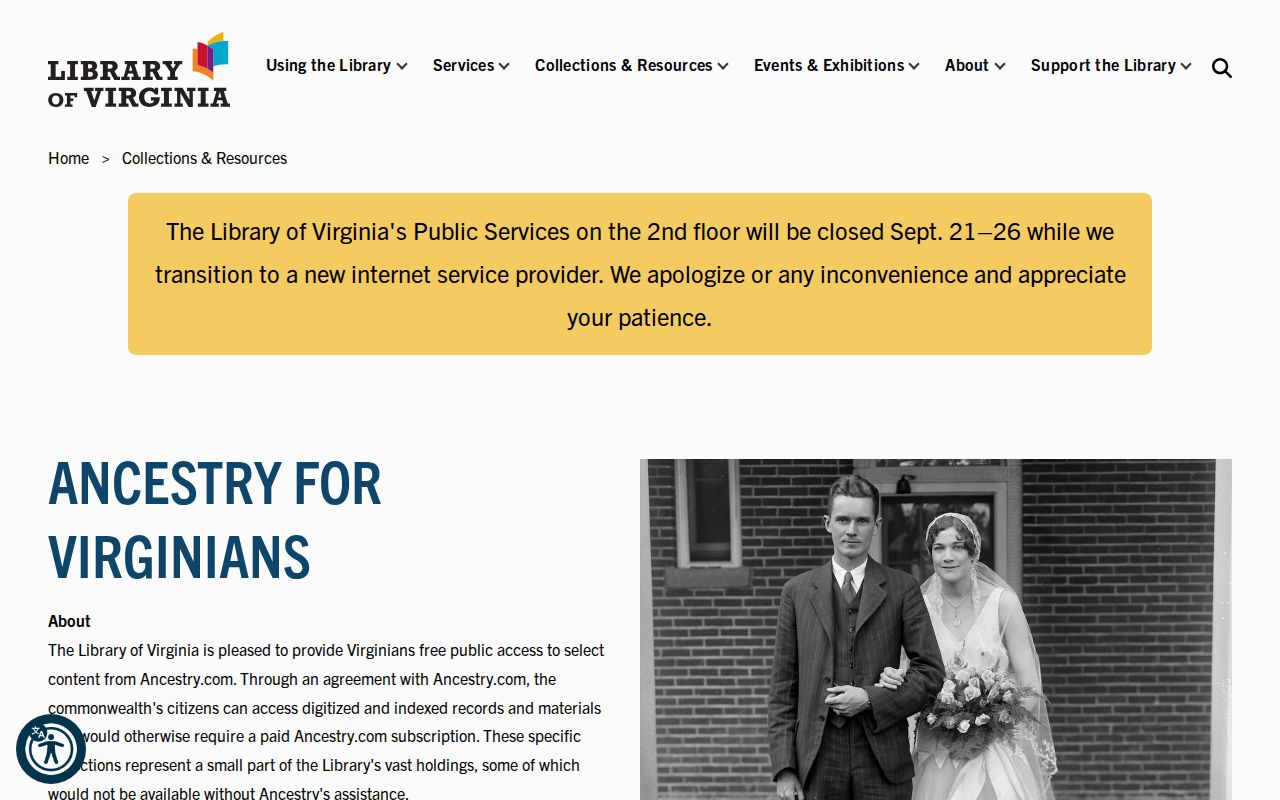
A digital browse is a useful first pass, but microfilm and local-library holdings remain important when a directory is not included online. For older county record series, the LVA Chesterfield microfilm catalog identifies deeds, wills, court, tax, marriage, military, and related reels.
Manchester in Chesterfield Directory Volumes
A clear boundary example is the Library of Virginia's Smith & Carter listing, reproduced from William H. Boyd's Boyd's Directory of Richmond City for 1869. The item is on page 203 and covers Manchester. It identifies the printed source, publisher information, date, and a Manchester place label. The listing is valuable because it demonstrates that a Chesterfield research target can be printed in a Richmond directory context.
Manchester became an independent city in 1870. Later, Richmond's 1970 annexation took 27 square miles and more than 47,000 former Chesterfield residents into a different jurisdiction. Date the address before choosing a directory and repeat the search under Manchester and Richmond when the period calls for it. This is particularly useful for a name that seems absent from a current county-oriented catalog.
Note: A directory place name describes the publisher's filing geography and does not by itself settle the property's modern county jurisdiction.
Reading a Chesterfield City Directory Entry
Printed city directories are annual snapshots gathered by a publisher. A typical entry may identify a surname and given name, a spouse or household notation, an occupation or business, and a street address. Some volumes also have boards, lodgers, telephone, business, government, or reverse-street sections. The exact abbreviations belong to the publisher, so find the volume's key before translating a short mark. An entry may reflect supplied information, a business address, or a stale listing. It is a lead that should be compared with census structure and a property or deed record.
| Name | Surname, given name, and often initials that help separate people with the same name. |
|---|---|
| Household clue | Spouse, widow, boarder, or lodging notation when the publisher included one. |
| Occupation or business | A trade, business, or workplace clue that can distinguish two similarly named people. |
| Printed address | House number, street spelling, room, or business location as the directory reports it. |
| Owner or renter mark | Only where the particular volume supplies such a mark; confirm its meaning in the key. |
- Criss-cross directory
- A later directory section arranged by street and address rather than surname, when that volume includes one.
- Householder index
- An index that points to the listed household head and may not name every person at the address.
- Abbreviation key
- The publisher's explanation of marks such as widow, residence, employed by, or boards; read it before interpreting an entry.
Common shorthand can include h for home or house, r for residence or rents, wid for widow, emp for employed by, and bds for boards. Those patterns are not universal. Photograph or transcribe the key from the actual issue used.
Chesterfield Directory Dates and Census
The printed year on a Chesterfield directory volume is not always the date a person was observed. Directories were often compiled in the prior year, so record the stated publication or canvass date and search one year on either side of a target. Pair the nearest directory with the 1900, 1910, 1920, 1930, 1940, or 1950 federal census. Census records add household relationships, ages, birthplace, and occupation, while a directory can add street-level continuity between the ten-year schedules.
| 1869 | Boyd's Richmond City directory includes a documented Manchester item. |
|---|---|
| 1870 | Manchester became an independent city, affecting directory and records context. |
| 1873-1960 | LVA/Ancestry identifies a statewide Virginia city-directory selection for this span. |
| 1950 | Latest released federal census schedules as of 2026 under the 72-year rule. |
Use an absence cautiously. A family may have moved, died, been omitted, appeared under initials, been listed at a business address, or fallen into an unposted local run. A second source is especially important before joining two same-surname households.
Chesterfield Directory Clues at CHSV
The Chesterfield Historical Society of Virginia collections can provide the companion material that a directory lacks. Its research facility at Historic Trinity Church, 10111 Ironbridge Road, holds manuscript documents, church minutes, country-store ledgers, family Bible records, letters, genealogy charts, alphabetical vertical files, family-history files, maps, and photographs. The organization lists Research, Genealogy, Military, Cemeteries, and Photographs among its active volunteer committees. Its phone is 804-796-7121; call before a research visit.
These are not a public resident roll. They can instead supply a church, store, school, railroad, mine, military unit, cemetery, or family name that helps distinguish a directory entry from another person with the same surname. Use that distinctive term in the Central Library catalog, CHSV files, LVA newspapers, and deed or probate indexes, then compare address and date evidence.
Chesterfield Directory Gaps and Losses
The Library of Virginia notes a real Chesterfield loss during the Civil War: one marriage register and some loose court papers did not survive. That gap does not establish that a marriage, court event, or household did not exist. Use surviving church registers, newspaper notices, probate, deeds, tax lists, and the Library of Virginia or FamilySearch films to test a directory lead from the same period.
County permanent land and court records begin in 1749, but online access is narrower than physical preservation. The Circuit Clerk's free land index reaches deeds from 1967 forward and wills from 1994 forward. Earlier connections may require the Record Room, archival reels, or cataloged historical books. A directory clue works best when it is treated as one step in that longer evidence chain.
Note: The Civil War loss is a documented records gap, so a negative search needs alternate sources rather than a final conclusion.
Trace a Chesterfield Directory Household
Follow one household across successive directory volumes by keeping every version of the name, street, and place label together. Begin in the alphabetical section, then check the address or street section where the volume has one. The aim is not to build a complete household roster from a single line. It is to document a sequence of annual clues and test each move against a census, deed, probate, obituary, military, church, or cemetery source.
- Search the earliest likely directory for the surname, initials, occupation or business, and known community.
- Record the address exactly as printed, including street spelling, number, apartment or room notation, and nearby names.
- Check the next available years, plus one year on either side when the publication date or canvass timing is uncertain.
- Use a criss-cross or street section, if present, to see whether the same address and neighboring listings continue.
- Pair the nearest directory years with the 1900 through 1950 census schedules, then use a final directory appearance as a bridge to probate, deeds, newspapers, or an obituary.
Require at least two matching clues before merging records for same-name people. A consistent surname, street, spouse, occupation, or institution can be stronger than a single name match. For modern street-level parcel research after a historical address has been pinned down, the Chesterfield street directory provides the separate address-records route.
Chesterfield Directory Place Names
Search more than one place label for the same family. Historic entries may use Manchester, Chesterfield, Richmond, North Chesterfield, Chester, Matoaca, Bon Air, Midlothian, or a rural route. The county has no incorporated city or town today, which is why Central Library's city and county directories complement Richmond and Manchester material at the Library of Virginia. A present mailing name can therefore hide the catalogue term needed for an older source.
For a historic Manchester address, date the jurisdiction first and then test both county and Richmond collections. The 1895 Manchester Sanborn set, county history, and directory listings can clarify neighborhood context, but a printed address alone is not title evidence. Keep the directory citation with its volume, year, page, place label, and any abbreviation key so the next source can be checked cleanly.